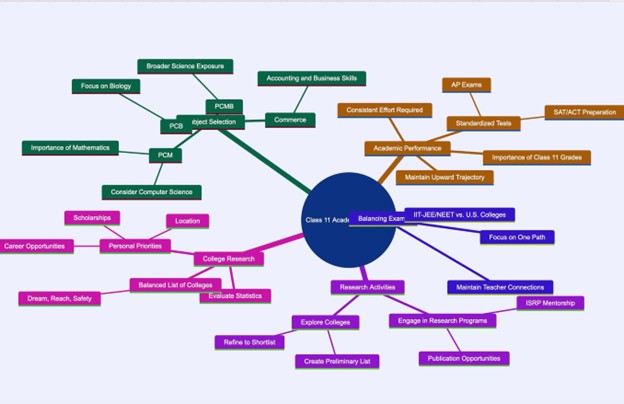
Choosing Subjects in Class 11
- After excelling in class 10, students face the decision of choosing a stream: PCM, PCB, PCMB, or Commerce.
- It’s crucial to complete Mathematics through grade 12, even if it seems irrelevant for future careers.
- Knowledge in math can be beneficial in various fields, especially those involving technology.
- Consider taking Computer Science, as it could enhance your skill set, regardless of your chosen career path.
- This decision-making period can be stressful, but it’s important to focus on long-term benefits.
Academic Importance in Class 11
- Class 11 is pivotal for academic performance; grades will impact college applications, especially for U.S. universities.
- Students should maintain an upward trajectory in their grades from class 9 through class 12.
- Excuses regarding the importance of board exams won’t suffice; consistent effort is necessary.
- Focus on achieving good grades in class 11 to strengthen your academic profile.
- Besides grades, standardized tests like the SAT or ACT should be completed in class 11.
- Students should aim to take multiple attempts to achieve a desirable score.
- Additionally, aim to write 5 to 15 AP exams during this year; retaking any previous tests for better scores is advisable.
Balancing Entrance Exams and College Applications
- Students often face the dilemma of preparing for Indian entrance exams (like IIT-JEE or NEET) while applying to S. colleges.
- Trying to excel in both can lead to poor performance in either; it’s better to focus on one path.
- If opting for a non-attending school to prepare for entrance exams, maintain connections with teachers for future recommendation letters.
- Quality involvement in activities is crucial; focus on a few meaningful experiences rather than spreading yourself too
- Aim for a deep, substantial commitment to 2-6 activities that showcase dedication and achievement.
Research Activities and Applications
- Class 11 is an ideal time to engage in research-based activities; consider programs like ISRP for mentorship and publication opportunities.
- Achieving a publication can greatly enhance your profile, and students should apply while spots are available.
- Research activities should be a focus in summer, leading to significant contributions that can be highlighted in
- Start exploring potential colleges and majors during class 11; utilize resources like college websites and platforms such as LinkedIn.
- Make a preliminary list of colleges based on factors like career opportunities, location, and scholarships, which can later be refined to a shortlist of 10-20 colleges.
College Research and Application Strategy
- Research is an ongoing process; aim to understand college statistics, student satisfaction, and post-graduation success.
- Students should evaluate colleges based on personal priorities, and avoid applying to too many institutions without clear reasons.
- A balanced list should include dream, reach, and safety colleges to ensure a wide range of options.
- Don’t get overwhelmed by the number of colleges; focus on a manageable and realistic application list.
- Engage with the community, and consider sharing experiences with subjects you disliked to foster discussion.
Choosing Subjects in Class 11
- After excelling in class 10, students face the decision of choosing a stream: PCM, PCB, PCMB, or Commerce.
- It’s crucial to complete Mathematics through grade 12, even if it seems irrelevant for future careers.
- Knowledge in math can be beneficial in various fields, especially those involving technology.
- Consider taking Computer Science, as it could enhance your skill set, regardless of your chosen career path.
- This decision-making period can be stressful, but it’s important to focus on long-term benefits.
Academic Importance in Class 11
- Class 11 is pivotal for academic performance; grades will impact college applications, especially for U.S. universities.
- Students should maintain an upward trajectory in their grades from class 9 through class 12.
- Excuses regarding the importance of board exams won’t suffice; consistent effort is necessary.
- Focus on achieving good grades in class 11 to strengthen your academic profile.
- Besides grades, standardized tests like the SAT or ACT should be completed in class 11.
- Students should aim to take multiple attempts to achieve a desirable score.
- Additionally, aim to write 5 to 15 AP exams during this year; retaking any previous tests for better scores is advisable.
Balancing Entrance Exams and College Applications
- Students often face the dilemma of preparing for Indian entrance exams (like IIT-JEE or NEET) while applying to S. colleges.
- Trying to excel in both can lead to poor performance in either; it’s better to focus on one path.
- If opting for a non-attending school to prepare for entrance exams, maintain connections with teachers for future recommendation letters.
- Quality involvement in activities is crucial; focus on a few meaningful experiences rather than spreading yourself too
- Aim for a deep, substantial commitment to 2-6 activities that showcase dedication and achievement.
Research Activities and Applications
- Class 11 is an ideal time to engage in research-based activities; consider programs like ISRP for mentorship and publication opportunities.
- Achieving a publication can greatly enhance your profile, and students should apply while spots are available.
- Research activities should be a focus in summer, leading to significant contributions that can be highlighted in
- Start exploring potential colleges and majors during class 11; utilize resources like college websites and platforms such as LinkedIn.
- Make a preliminary list of colleges based on factors like career opportunities, location, and scholarships, which can later be refined to a shortlist of 10-20 colleges.
College Research and Application Strategy
- Research is an ongoing process; aim to understand college statistics, student satisfaction, and post-graduation success.
- Students should evaluate colleges based on personal priorities, and avoid applying to too many institutions without clear reasons.
- A balanced list should include dream, reach, and safety colleges to ensure a wide range of options.
- Don’t get overwhelmed by the number of colleges; focus on a manageable and realistic application list.
- Engage with the community, and consider sharing experiences with subjects you disliked to foster discussion.